
More Than a Prosthesis: Where Medical Science Meets Restorative Art
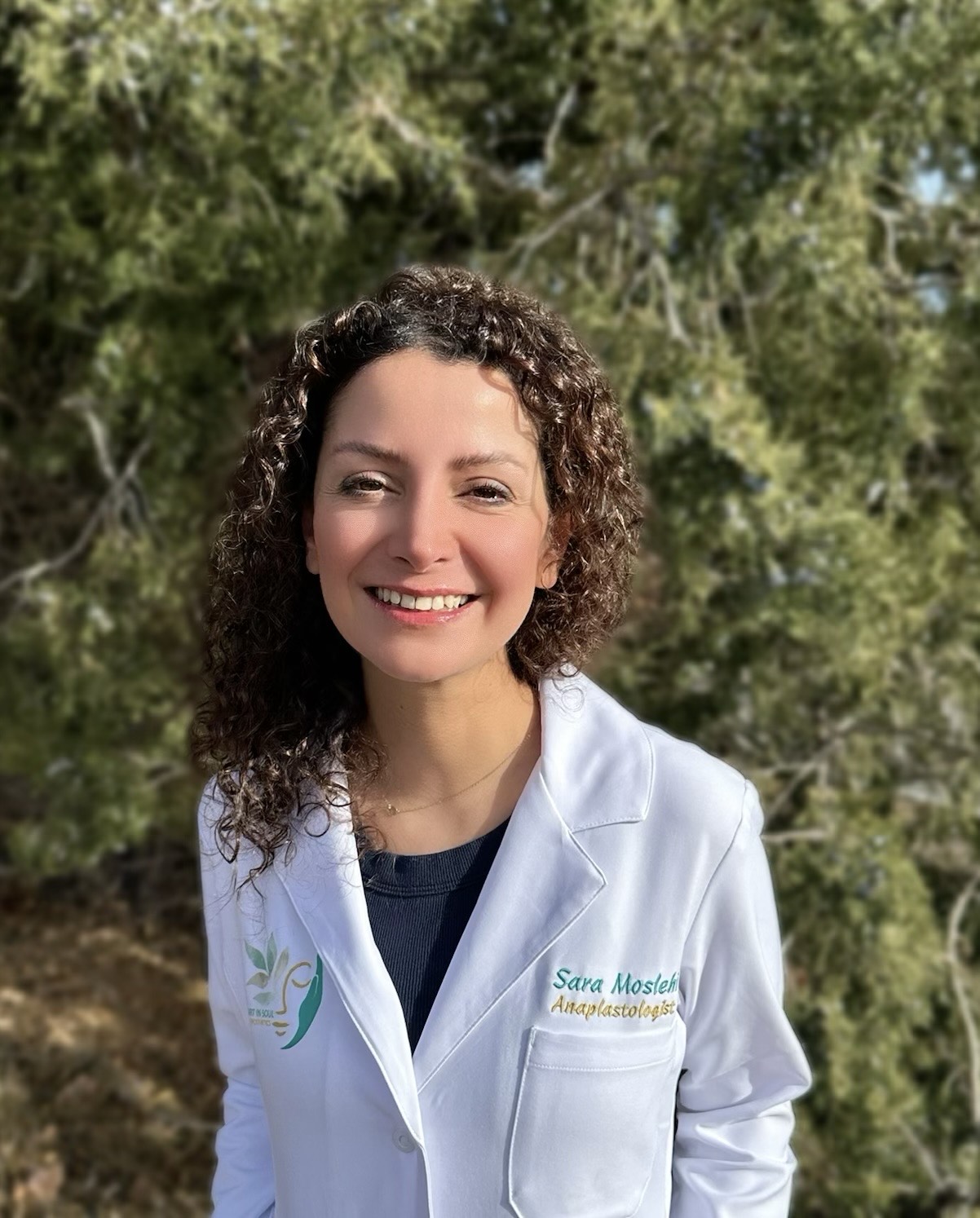

When I say the word anaplastology, many have never heard of the profession before. I am a Clinical Anaplastologist and Ocularist, and for more than 18 years I have worked in medical prosthetics. My work includes custom facial, somatic, and ocular prostheses for individuals affected by congenital differences, cancer, trauma, burns, surgery, and other medical conditions.
Anaplastology combines anatomy, medical science, sculpture, color, design, and detailed handwork. But for me, the most important part of this profession has always been the person behind the prosthesis.
My own path into this field was deeply personal. My father, Iraj Moslehi, is an anaplastologist who devoted his career to prosthetic rehabilitation in Iran and Middle East countries. Before I became an anaplastologist myself, I mainly helped him with graphic design and marketing.
Then one patient changed everything for me.
One day, my father told me about a young woman around my age who had lost her ring finger in a fireworks accident. She was preparing to get married and was deeply upset about what had happened, especially with her wedding approaching. My father asked me to be with him during her treatment process so she might feel more comfortable having someone close to her age there.
When her prosthesis was completed and delivered, she began crying tears of joy. She hugged me and told me how much it meant to her that she would be able to wear her wedding ring on her ring finger.
Something changed in me that day. I knew in my heart that this was what I wanted to do.
That experience taught me very early that prosthetic rehabilitation is not only about replacing anatomy. Sometimes a small part of the body can hold enormous emotional meaning.
Every Patient Has a Different Story
Since beginning my career in 2007, I have worked with patients of many ages and backgrounds in the United States and internationally.
My work has included custom ears, noses, orbital and facial prostheses, fingers, toes, prosthetic eyes, scleral shells, and other restorations. I have been involved in every stage of the process, including evaluation, impression-taking, sculpting, fabrication, detailed color matching, fitting, and follow-up care.
Every case is different because every person is different.
When a patient first comes to see me, listening is one of the most important parts of the appointment. I want to understand what happened, what concerns them, what they hope for, and what is most important in their daily life.
The technical work matters, but so does the way a person feels during the process.

Creating a Prosthesis Is a Partnership
A custom prosthesis may take several appointments and many detailed steps. Depending on the type of prosthesis, this can involve creating an impression or model, sculpting the anatomy, matching skin tones or eye color, adding fine details, and determining the best method of retention. Facial prostheses may be retained using medical adhesive, implants, magnets, or natural anatomy.
I believe the patient should be part of the process. They should feel comfortable telling me what they see, what they like, what concerns them, and what they hope to improve.
I also believe strongly in honesty. Anatomy, tissue changes, surgical limitations, or other factors can affect what is realistically possible. My responsibility is to explain those limitations clearly while still doing everything I can to achieve the best possible result.
More Than Appearance
A prosthesis may help restore missing anatomy, but the impact can go far beyond appearance.
For some people, it may help them feel more comfortable returning to work, attending social events, being photographed, traveling, or simply going through daily life with greater confidence. For others, their priorities may be different.
There is no single definition of a successful outcome.
A prosthesis is a personal choice, and no one should feel that they must change their appearance in order to be accepted or respected.
This is especially important to me when working with children and families with craniofacial differences. Some of the most meaningful work in my career has involved children with microtia and their families.
Children deserve to grow up knowing that their value is not determined by their appearance. If a child or family chooses a prosthesis, my role is to support that decision with sensitivity, patience, skill, and respect.
What I Learned from My Father
My father’s work influenced not only the technical side of my career, but also the way I believe patients should be treated.
He built his practice while working with limited materials, equipment, and resources, yet remained committed to helping people who needed prosthetic rehabilitation. In 2013, he received the International Anaplastology Association Humanitarian Award in recognition of his dedication and service, and I had the honor of accepting the award on his behalf.
From him, I learned that technical skill is only one part of this profession. Patients also need kindness, gentleness, honesty, and respect. Those values continue to guide the way I practice today.
For Someone Beginning This Journey
If you or someone you love is considering a facial, ocular, or other custom prosthesis, I would encourage you to ask questions and take your time.
Learn about your options. Understand what is realistically possible. Ask how the prosthesis will be made, how it will be retained, how it will be cared for, and what follow-up may be needed.
Most importantly, find a provider who listens to you and makes you feel included in your care.
My goal is authenticity: creating prostheses with care and attention that help patients feel comfortable, confident, and respected.
After more than 18 years in this profession, I remain grateful every time someone trusts me with such a personal part of their life.
For me, anaplastology is where medical science meets restorative art. But at its heart, it is about people.
Interested in meeting with an anaplastologist? FACES can assist with your travel to see an anaplastologist. Click here to apply for our Craniofacial Medical Travel Grant. FACES does not refer patients to clinicians.


Comments